
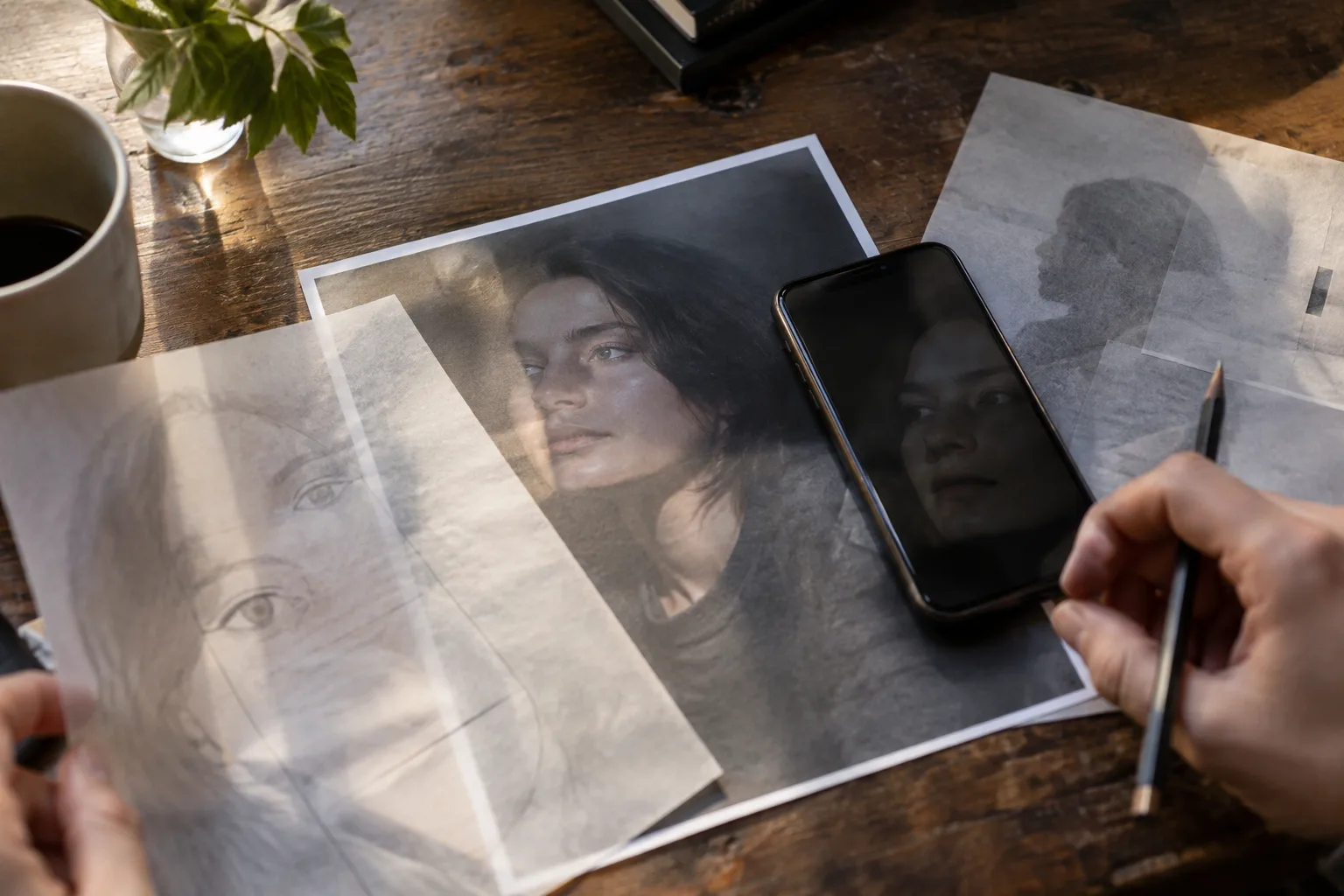
AI and Photography: Client Likeness, Social Media, and What Photographers Should Watch Next
Photographers have adapted to major technological shifts before. Digital cameras changed the economics of shooting. Smartphones put capable cameras in nearly every pocket. Editing software changed what could happen after the shutter was pressed.
Artificial intelligence may be another shift of that scale, but it feels different for a reason. AI is not only changing how photographs are edited. Generative systems can create convincing images of people and places that were never photographed at all, and questions about how existing photographs and human likenesses may be used have moved from theoretical discussions into everyday concerns for working photographers and their clients.
There is no need to pretend we know exactly where this ends. We do not. But photographers can pay attention to what is changing, communicate thoughtfully with clients, and make deliberate choices about how they publish and protect the work entrusted to them.
Are photographers being threatened by AI?
In some parts of the market, AI-generated imagery will almost certainly compete with work that previously required a photographer. A business that needs a generic conceptual image, for example, may decide that generating one is faster or less expensive than commissioning a traditional shoot.
That does not mean every kind of photography is equally exposed.
A family hiring someone to document their actual children, a couple wanting photographs of their wedding day, parents preserving the first weeks with a newborn, or a business owner needing authentic photographs of a real team still needs something generative AI cannot simply substitute: a record of people who were actually there.
The distinction between creating an image and photographing something that happened may become more important as synthetic imagery becomes more convincing.
For photographers, that could shift some of the value proposition away from technical image production alone and toward trust, access, direction, experience, relationships, provenance, and the ability to document real moments well.
The more immediate concern: what happens to photographs after we post them?
Photographers have always made decisions about where client images appear. Websites, portfolios, blogs, online galleries, social media, advertising, competitions, and vendor sharing all create different levels of exposure.
AI adds another consideration: a photograph available online can potentially become source material for automated systems, image-generation tools, face or likeness manipulation, scraping, indexing, or other uses the photographer and subject never anticipated when the photograph was created.
The exact rights and technical practices involved depend on the platform, jurisdiction, service, account settings, agreements, and type of use. Policies also change. Photographers should be cautious about sweeping statements such as “posting a photo means an AI company owns it” or, at the other extreme, “your photographs can never be used by AI without permission.” The reality is more complicated.
What has changed is the range of things that can be done with a publicly accessible photograph and the speed at which those capabilities are developing.
Client likeness deserves separate consideration from copyright
Photographers naturally approach this conversation through copyright because photographs are our work. But clients may approach it through a different question:
What can happen to an image of me or my child once it is online?
Those are related issues, but they are not identical.
A photographer may hold copyright in a photograph while the photograph still contains the recognizable likeness of another person. Questions involving copyright, publicity or personality rights, privacy, consent, contracts, model releases, platform terms, and AI regulation can overlap without being interchangeable.
That makes this an area where photographers should avoid giving clients broad legal guarantees they cannot actually make. If your business needs specific guidance about releases, commercial usage, privacy obligations, or AI-related contract language, an attorney familiar with your jurisdiction and photography business is a better source than a social-media thread.
Should photographers stop posting client photographs on social media?
That is ultimately a business and client-experience decision, not a universal rule.
Social media and online portfolios remain important ways for photographers to show prospective clients what their work looks like. For many photographers, seeing real sessions is part of what gives a future client confidence to inquire.
But AI gives photographers another reason to think intentionally about what they publish rather than treating every delivered image as potential marketing content.
You might decide to be more selective about which photographs you post, reconsider how prominently children are featured, review the permissions you request from clients, offer different sharing choices, or simply have a clearer conversation about how portfolio and social-media usage works in your business.
The right approach may be different for a commercial photographer working with professional talent than for a newborn photographer working with infants or a school photographer handling large numbers of children.
Review the platforms you actually use
It is tempting to create one universal “AI policy” for social media, but platforms and services have different terms, settings, and product features, and those can change over time.
Photographers should periodically review the current terms and privacy or AI-related controls of the services where they upload client photographs. Pay particular attention to the distinction between posting publicly, sharing privately, using a client gallery, and uploading images into an AI-powered editing or generation service.
Do not assume that a setting you reviewed two years ago still works the same way today.
Be careful when uploading client photographs into AI tools
There is also an important difference between an image appearing publicly on your photography business's social account and you intentionally uploading a client's photograph into another AI service.
AI-assisted culling, editing, masking, retouching, captioning, search, and administrative tools can be genuinely useful to photographers. Generative tools can also be useful for experimentation and creative work.
But before uploading identifiable client photographs, especially sensitive sessions or photographs of children, understand what service you are using. Review how uploaded material is stored, processed, retained, and potentially used. Consider whether that use is consistent with what you have told the client and the agreements governing the session.
Convenience should not replace due diligence when another person's likeness is involved.
Talk about authenticity without turning it into an anti-AI campaign
Photographers do not need to condemn AI to explain why real photography matters.
If synthetic imagery becomes commonplace, authenticity itself may become more valuable. A photograph can mean something because the people in it really stood together, the expression really happened, the wedding really took place, the child really looked that way at that age, or the business really has those employees and that workspace.
That is a strong story for photography without requiring us to argue that every generated image is bad or that photographers who use AI tools are somehow less legitimate.
AI can be both a useful tool and a source of legitimate concern. Those ideas can coexist.
Where AI may help photographers
The future of AI in photography is unlikely to be only about image generation. Some of its most practical uses may happen around the photograph rather than replacing it.
Photographers already spend substantial time on repetitive business and production tasks: sorting, organizing, searching, preparing communication, planning sessions, writing first drafts, managing information, and moving work through a client workflow. AI-assisted tools may reduce some of that administrative or production burden.
Used thoughtfully, that could give photographers more time for the parts of the job that depend heavily on human judgment: understanding the client, directing people, noticing moments, making creative decisions, solving problems on location, and creating an experience people trust.
Where the photography market may change
Some categories will probably feel more pressure than others. Work whose primary value is producing a generic visual concept may face more direct competition from generated imagery. Photography whose value depends on documenting a specific person, product, place, event, or moment has a different relationship with AI.
We may also see clients asking more questions about authenticity. Businesses may need ways to establish that photographs represent real products or people. News and documentary photography will continue wrestling with verification and provenance. Portrait photographers may encounter clients who want extensive AI alteration alongside clients who specifically value a more faithful representation.
There will probably be new creative categories we do not have good names for yet.
What seems unlikely is that photography simply stays exactly as it was before generative AI arrived.
Practical steps photographers can take now
- Review your client agreements and model releases. Make sure your actual marketing and portfolio practices match what clients have agreed to.
- Revisit what you post publicly. You do not necessarily need to stop sharing work, but choose intentionally rather than automatically.
- Pay special attention to vulnerable subjects. Photographs involving children, intimate sessions, medical circumstances, or other sensitive contexts deserve additional thought.
- Read the current terms of the platforms and AI tools you use. Policies and product settings evolve quickly.
- Separate copyright questions from likeness and privacy questions. Owning the photograph does not make every question about the person depicted disappear.
- Be transparent where it matters. If AI materially changes what a photograph represents, consider whether clients or viewers would reasonably expect to know that.
- Keep learning without panicking. Photographers do not need to adopt every new tool, but ignoring the technology entirely makes it harder to make informed choices.
What should photographers tell clients who are worried about AI?
Start by listening to the specific concern. A client who does not want photographs of their children posted publicly is asking a different question from a commercial client concerned about unauthorized advertising or a portrait client worried about synthetic alterations.
Explain your own practices accurately: where you share images, what permissions you request, which third-party services are part of your workflow, and what choices the client has. Avoid promising that an image posted publicly can never be copied, scraped, altered, or misused. No photographer controls the entire internet.
What you can control is how thoughtfully your own business handles the photographs clients trust you to create.
The future may make the photographer-client relationship more important, not less
AI makes it increasingly easy to manufacture an image. It does not manufacture the experience of being photographed by someone you trust.
For working photographers, that distinction is worth paying attention to.
The future may include AI-assisted editing, synthetic backgrounds, generated commercial imagery, stronger authenticity tools, changing social-platform policies, new laws, and uses we cannot predict yet. Some developments will help photographers. Some will create uncomfortable questions. Many will probably do both.
Our job does not have to be predicting every turn correctly.
It can be simpler than that: stay informed, treat client likeness with care, use new tools deliberately, communicate clearly, and keep building a photography business around the things clients cannot get from a prompt alone—a real person behind the camera, a real relationship, and photographs connected to moments that actually happened.