
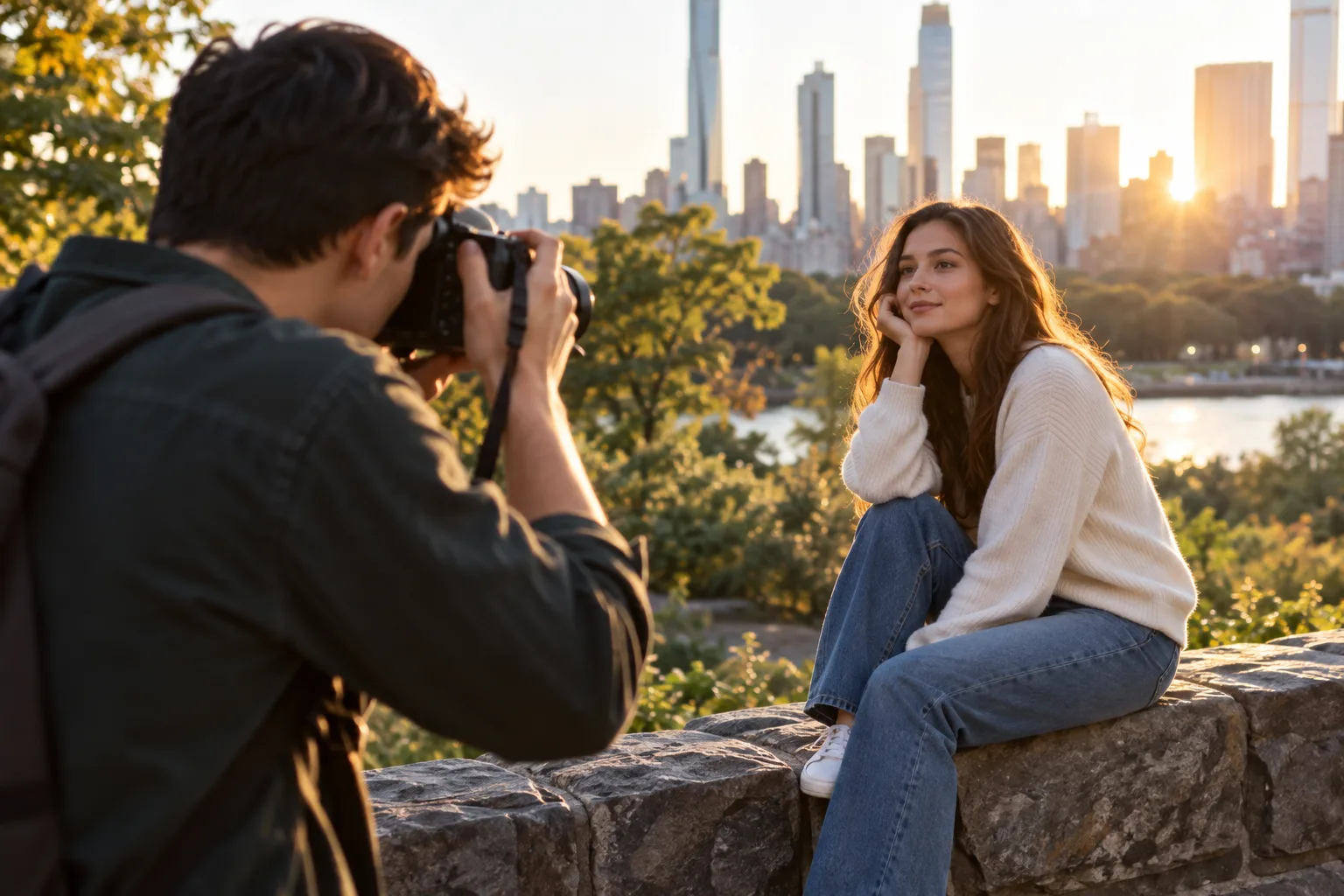
How to Become a Photographer and Start a Photography Business
If you are searching for how to become a photographer, you may actually be asking several questions at once.
As you move from practice to paid assignments, calculate the average revenue your sessions need to earn. Include editing and client communication as well as the time spent photographing.
Do I need photography school? What camera should I buy? How do I learn photography well enough to charge people? How do photographers get their first clients? Do I need an LLC? How much should a beginner photographer charge? And at what point does taking pictures become a real photography business?
The encouraging answer is that you do not have to solve all of those questions on day one.
Becoming a professional photographer usually happens in stages: learn the craft, practice with real people and situations, build work you can show, understand the business side, start finding clients, and create a repeatable process for serving them.
This guide walks through that path and answers many of the questions aspiring photographers search for when they are trying to figure out where to begin.
How do I become a photographer?
There is no single required path into photography. Photographers come from art programs, journalism, marketing, completely unrelated careers, and self-taught backgrounds.
A practical path looks something like this:
- Learn how your camera and exposure work.
- Practice composition, light, focus, and editing.
- Choose a few kinds of photography to explore.
- Photograph real subjects consistently.
- Build a focused portfolio.
- Learn the basic business requirements where you live.
- Work out what it costs you to photograph a session.
- Set initial prices and create a clear offer.
- Start marketing and booking clients.
- Build a client workflow you can repeat.
You do not need to master every photography genre before taking the next step. You need enough technical consistency to produce the work you promise and enough business knowledge to serve clients responsibly.
Do you need a degree to become a photographer?
Many photography careers do not require a photography degree. Formal education can provide structured instruction, critique, access to equipment, networking, and a foundation in visual history and technique, but it is not the only way to learn.
Self-taught photographers can build skills through courses, workshops, books, assisting experienced photographers, practice, mentorship, and careful review of their own work.
The better question may be: What do I need to learn to produce professional work consistently?
Clients generally care about the quality and reliability of the work you deliver, the experience of working with you, and whether you can create the kind of photographs they are hiring you to make.
Can I become a photographer without experience?
Everyone starts without professional experience. The important distinction is between beginning to learn photography and charging clients before you can reliably deliver what you promised.
Start by photographing situations where you have room to learn. Practice with friends or willing participants. Create personal projects. Assist or second-shoot where appropriate. Photograph in different lighting conditions instead of only practicing when everything is easy.
Experience comes from making photographs, reviewing what worked, identifying what did not, and doing it again.
How long does it take to become a photographer?
There is no universal timeline. Learning basic camera operation can happen relatively quickly. Developing a recognizable style, strong people skills, consistent editing, business judgment, and the ability to handle difficult real-world sessions takes longer.
Instead of asking whether you have practiced for a certain number of months, ask whether you can reliably produce the result you are offering under the conditions your clients are likely to encounter.
A photographer who can create beautiful images only during perfect golden-hour conditions has a different level of readiness from one who can adapt when clouds arrive, a venue is dark, a child refuses to cooperate, or the schedule changes.
What skills do you need to become a professional photographer?
Photography is both a creative craft and, when clients are paying you, a service business.
Technical and creative skills may include exposure, focus, composition, understanding light, lens selection, posing or directing subjects, color, editing, file management, and backup practices.
Professional skills matter too: communication, scheduling, setting expectations, managing time, handling client information, preparing for sessions, delivering consistently, and keeping track of the business side of each job.
The photographer with the most expensive camera is not automatically the photographer who gives clients the best experience.
What camera do I need to start a photography business?
You do not need to own the most expensive camera available before you begin learning photography or building a portfolio.
Your equipment should eventually match the kind of work you intend to sell. Wedding photography, real-estate photography, studio portraits, sports, newborn photography, and product work can create very different equipment requirements.
Before spending heavily, learn the equipment you already have and identify the actual limitations you are encountering. Buy or rent equipment to solve real problems rather than trying to purchase your way into feeling professional.
As you begin accepting paid work, think beyond the primary camera. Depending on the job, backup equipment, batteries, memory cards, lighting, storage, and a reliable file-backup process may be just as important.
What type of photography should I specialize in?
You do not have to choose a photography niche immediately, but exploring different types of work helps you discover what you enjoy and where your skills fit.
Common photography businesses include family photography, weddings, newborns, seniors, maternity, boudoir, headshots, personal branding, events, sports, schools, real estate, products, commercial work, and other specialties.
Pay attention to more than whether you like the final photographs. Ask whether you enjoy the actual working conditions. Wedding photography involves long event days and rapidly changing situations. Newborn photography requires a very different pace and set of considerations. Sports photography can demand specialized equipment and fast decision-making. Branding photography may involve significant planning with business clients.
A niche should fit the work you want to do, not merely a keyword that appears popular.
How do I build a photography portfolio with no clients?
You do not need paying clients before you can create portfolio work.
Plan shoots that resemble the work you eventually want someone to hire you for. If you want to photograph families, photograph families. If you want senior clients, create senior portraits. If you want branding work, work with a business owner on a planned portfolio session.
A focused portfolio is usually more useful than a gallery containing every good photograph you have ever made.
Model calls can also help photographers intentionally create work for a specific purpose. Our guide to running a photography model call explains how to plan the shoot, collect applications, set expectations, and organize the session.
When are you ready to charge for photography?
There is no certification that suddenly declares you ready. Before charging, you should be able to produce reasonably consistent work, communicate what the client is purchasing, manage the session safely and professionally, and deliver what you promised.
Charging money also means accepting business responsibilities. You need to understand your local requirements, keep appropriate records, communicate policies, price the work intentionally, and have a process for handling clients.
Do not use “I'm a beginner” as a reason to promise more than you can deliver. A smaller, clearly defined offer is better than selling a complicated package you are not prepared to fulfill.
How much should a beginner photographer charge?
There is no responsible universal beginner rate because photography businesses have different expenses, markets, services, tax obligations, session lengths, editing requirements, and income goals.
Start by understanding your photography cost of doing business. Include more than the hour spent taking pictures. Equipment, software, insurance, education, travel, marketing, payment processing, editing time, administrative work, taxes, and other expenses can all affect what the business needs to earn.
Then build pricing around your own costs, capacity, market, and offer rather than copying a number from another photographer in a Facebook group.
How do I start a photography business?
Once you intend to operate as a business, there are practical steps beyond building a portfolio.
Your exact legal and tax requirements depend on where you operate, so verify them with the appropriate local agencies and professionals. In general, photographers should think about business structure and registration, taxes, bookkeeping, insurance, contracts and policies, pricing, payment processes, record keeping, marketing, client communication, and data or file management.
Our starting a photography business checklist gives you a broader framework for working through those decisions.
Do photographers need an LLC?
Not every photographer operates under the same business structure, and whether an LLC or another structure makes sense depends on your location and circumstances.
Do not choose a legal structure solely because another photographer says that is what professionals do. Review the requirements and implications where you operate and consult an appropriate attorney, accountant, or tax professional when necessary.
Do photographers need insurance?
Insurance needs vary by business, services, equipment, location, and contracts. Photographers may encounter considerations involving equipment, general liability, professional activities, vehicles, employees, or other risks.
Some venues or commercial clients may also have their own insurance requirements. Speak with a qualified insurance professional about coverage appropriate for the photography work you actually perform.
How do photographers get their first clients?
Your first photography clients often come from a combination of people who already know you and deliberate efforts to make your work visible.
Build a portfolio that represents what you want to sell. Create a simple website or online presence where someone can understand what you photograph and how to contact you. Tell people clearly what you are offering. Build relationships in your community and with businesses or professionals whose audiences overlap with yours.
When interest starts arriving, make the next step easy. A potential client should not have to hunt for your contact information or wonder what happens after they inquire.
Our guide to getting more photography clients looks at the complete path from discovery and inquiry through booking and follow-up.
What should a photography website include?
A beginning photography website does not need dozens of pages. It needs to help the right person understand your work and take the next step.
Useful elements can include a focused portfolio, information about the photographer or business, the types of sessions or services offered, relevant pricing or starting information where appropriate for your sales process, answers to common questions, and a clear inquiry path.
Session Savvy's photography inquiry forms can give potential clients a structured way to contact you while collecting the information you need to respond.
How do photographers manage clients once they start booking?
This is the part many new photographers do not think about until the first few clients arrive at the same time.
A paid photography session can create an inquiry, client record, messages, scheduling details, questions, payment information, session preparation, tasks, follow-up, and delivery work.
At very low volume, you may be able to keep all of that in your head. As bookings increase, relying on memory and scattered messages becomes much harder.
Session Savvy is photography-business software designed to help organize that side of the job. You can keep photography client information organized, use client questionnaires, create and send photography invoices, and follow each job through session workflow management.
Building those habits early can make growth less chaotic than trying to reconstruct a system after your calendar fills up.
Can photography be a full-time career?
Photography can be a full-time business for some people, a part-time business for others, and a creative side business for photographers who prefer to keep another career.
The right goal depends on the income the business can realistically produce, your expenses, available market, personal responsibilities, desired workload, and the kind of photography you want to do.
You do not have to quit another career immediately to take photography seriously. Building gradually can give you time to improve your work, learn the business, test demand, and understand whether you actually enjoy running the business as much as you enjoy making photographs.
How do I become a professional photographer with no experience?
Start smaller than the question.
Learn your camera. Learn light. Photograph people or subjects regularly. Study your mistakes. Build a portfolio around work you genuinely want to do. Learn what running the business costs. Understand your local business requirements. Create a clear first offer. Find your first clients. Deliver what you promise.
Then repeat the process with better skills and better systems.
You do not become a photographer because you finally bought the right camera or reached a particular follower count. You become one by doing the work consistently, learning how to serve the people who hire you, and building a business capable of supporting the photography you want to create.
If you are ready to start organizing the business side, explore Session Savvy and build a client workflow before your inbox becomes your workflow.